
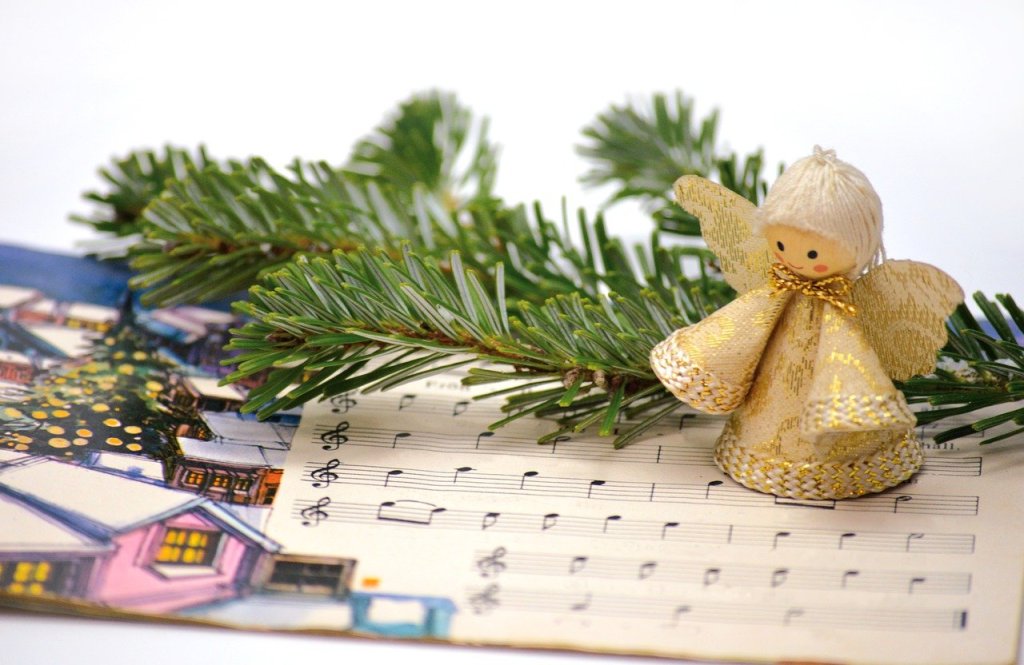
Christmas carols have become an ingrained Christmas holiday tradition, from traditional door-to-door Christmas carolling around local neighbourhoods to local events and singing clubs.
Yet, the origins of these beloved songs stretch back far beyond the Christmas traditions we know today. Their journey—from ancient pagan rituals to the heart of modern holiday festivities—offers a fascinating glimpse into the evolution of music, culture, and belief systems.
The Pagan Roots Of Seasonal Singing
Long before Christianity spread across Europe, midwinter festivals such as Yule and Saturnalia featured songs to mark the turning of the seasons. These pagan communities celebrated the winter solstice with chants and music, honouring the renewal of life and light as the days began to grow longer. These early songs, often sung in circles around the fire, were not carols as we know them but were deeply rooted in nature and seasonal cycles.
The term “carol” itself derives from the Old French word carole, meaning a circle dance accompanied by singing. The idea of carolling originally had little to do with religion or Christmas. It was a communal activity, uniting people in song and movement to keep warm and raise spirits through the cold and bleak winter months.
The Christian Adoption Of Carols
As Christianity spread through Europe, early Church leaders recognised the unifying power of music. They began to incorporate songs into religious practices, adapting pagan traditions to align with Christian theology. By the 4th century, hymns honouring Christ’s birth became a part of the Christmas liturgy, though these were solemn and sung exclusively in Latin.
It wasn’t until the 13th century, under the influence of figures like St. Francis of Assisi, that carols took on Christian themes. St. Francis encouraged the use of vernacular languages in worship and introduced Nativity plays featuring lively songs that audiences could join. This shift marked the beginning of carols becoming accessible to the general public, moving them out of church services and into communal life.
The Decline And Revival Of Carols
The popularity of carols has waxed and waned over the centuries. During the Puritan era in 17th-century England, Christmas celebrations – including carolling – fell out of favour. The Puritans considered such festivities frivolous and unholy, and carols were largely suppressed, due in part to their roots in Pagan celebrations.
The revival came in the Victorian era, fuelled by a renewed interest in Christmas traditions. This period saw the publication of numerous carol collections, such as Christmas Carols, Ancient and Modern by William Sandys in 1833. Sandys’ compilation included many now-classic carols, such as God Rest Ye Merry, Gentlemen and The First Noël, preserving them for future generations.
In the Victorian era, people of all classes embraced carolling with enthusiasm, establishing it as a cornerstone of Christmas celebrations.
Groups of singers would go door-to-door, bringing music and goodwill to their neighbours. The concept of “wassailing,” originally a pagan tradition of blessing crops, transformed into carol singing, with participants offering their voices in exchange for food or drink.
The Birth Of Modern Carols
The 19th and early 20th centuries saw the creation of many iconic carols that remain popular today. Songs like O Holy Night and Silent Night emerged during this period, blending religious themes with stirring melodies that resonated across cultures.
Silent Night in particular has a remarkable history. Written in 1818 by Franz Xaver Gruber and Joseph Mohr in Austria, it was first performed on Christmas Eve with just a guitar for accompaniment due to a broken church organ. Its simple, heartfelt melody quickly spread across Europe and eventually became a global symbol of peace and hope.
Carols In Contemporary Culture
Today, carols are an enduring part of Christmas, bridging the gap between the sacred and the secular. Traditional hymns like Hark! The Herald Angels Sing sit comfortably alongside more modern classics such as Jingle Bells and White Christmas. While some lament the commercialisation of Christmas, carols remain widely popular, connecting generations through shared melodies.
Carolling itself has also adapted to modern times. From grand performances in concert halls to flash mobs in shopping centres, the spirit of carolling continues to evolve. Charities have embraced carol singing as a fundraising tool, with groups performing in public spaces to collect donations for worthy causes.
Why Carols Endure
The lasting appeal of Christmas carols lies in their ability to evoke a sense of community and nostalgia. Their melodies and lyrics, often simple yet profound, tap into universal themes of love, hope, and renewal. Whether sung in the warmth of a family gathering, as part of a choir, or played on the radio, carols have the unique power to make us pause and reflect, even in modern and increasingly secular times.
From their pagan beginnings to their prominent place in today’s festive season, Christmas carols have endured through the years, while retaining their essence as songs of celebration and unity.
As we sing them this holiday season, we participate in a tradition that connects us not only to one another but also to generations past, who found meaning and spiritual connection in these timeless melodies.
 Superlocrian
Leave a comment